


Hepatitis B is a virus that infects the liver. It can cause a short-term illness, but for some people it becomes a lifelong infection that can lead to serious liver damage, including liver failure, cirrhosis (scarring of the liver), or liver cancer.
The virus spreads through contact with infected body fluids such as blood, saliva, semen, and vaginal fluids. It can also be passed from a mother to her baby during birth.
Around the world, hepatitis B remains a major health problem. In 2022, an estimated 254 million people were living with chronic (long-term) hepatitis B, and about 1.1 million people died from complications of the disease.
The good news is that hepatitis B can be prevented with a safe and highly effective vaccine.
Source:
WHO - Hepatitis B
Many adults who become infected do not have symptoms, which means they may not know they have the virus and can unknowingly spread it to others.
When symptoms do occur, they may include:
• Yellowing of the skin or eyes (jaundice)
• Feeling very tired
• Nausea or vomiting
• Stomach pain
• Loss of appetite
Many pregnant women who have hepatitis B do not know they are infected because they feel completely healthy. For this reason, hepatitis B testing is recommended during pregnancy, usually at the first prenatal visit.
Babies and young children with hepatitis B often do not have symptoms either. However, even without symptoms, they can develop chronic hepatitis B, which may lead to serious liver disease later in life.
Source: Mayo - Hepatitis B
If a mother has hepatitis B, the virus can easily be passed to her baby during birth, whether the delivery is vaginal or by cesarean section (C-section).
Babies and young children can also be exposed through close contact with infected family members or caregivers.
The risk of lifelong infection is much higher in babies than in adults. If a baby becomes infected with hepatitis B, there is about a 90% chance that the infection will become chronic.
The hepatitis B vaccine is safe and highly effective. When all recommended doses are received, it is up to 95% effective at preventing hepatitis B infection.
Source:
CDC - Clinical Overview of Perinatal Hepatitis B
The hepatitis B vaccine does not contain the live virus and cannot cause hepatitis B.
Instead, it contains a small piece of the virus's outer coating. This teaches the immune system to recognize and fight the virus. If your child is exposed to hepatitis B in the future, their immune system can quickly respond and help prevent infection.
Source:
Children's Hospital of Philadelphia: Hepatitis B - The Disease & Vaccine
AAP's Recommended Child and Adolescent Immunization Schedule for Ages 18 Years or Younger
The recommendation on behalf of the American Academy of Pediatrics is the following:
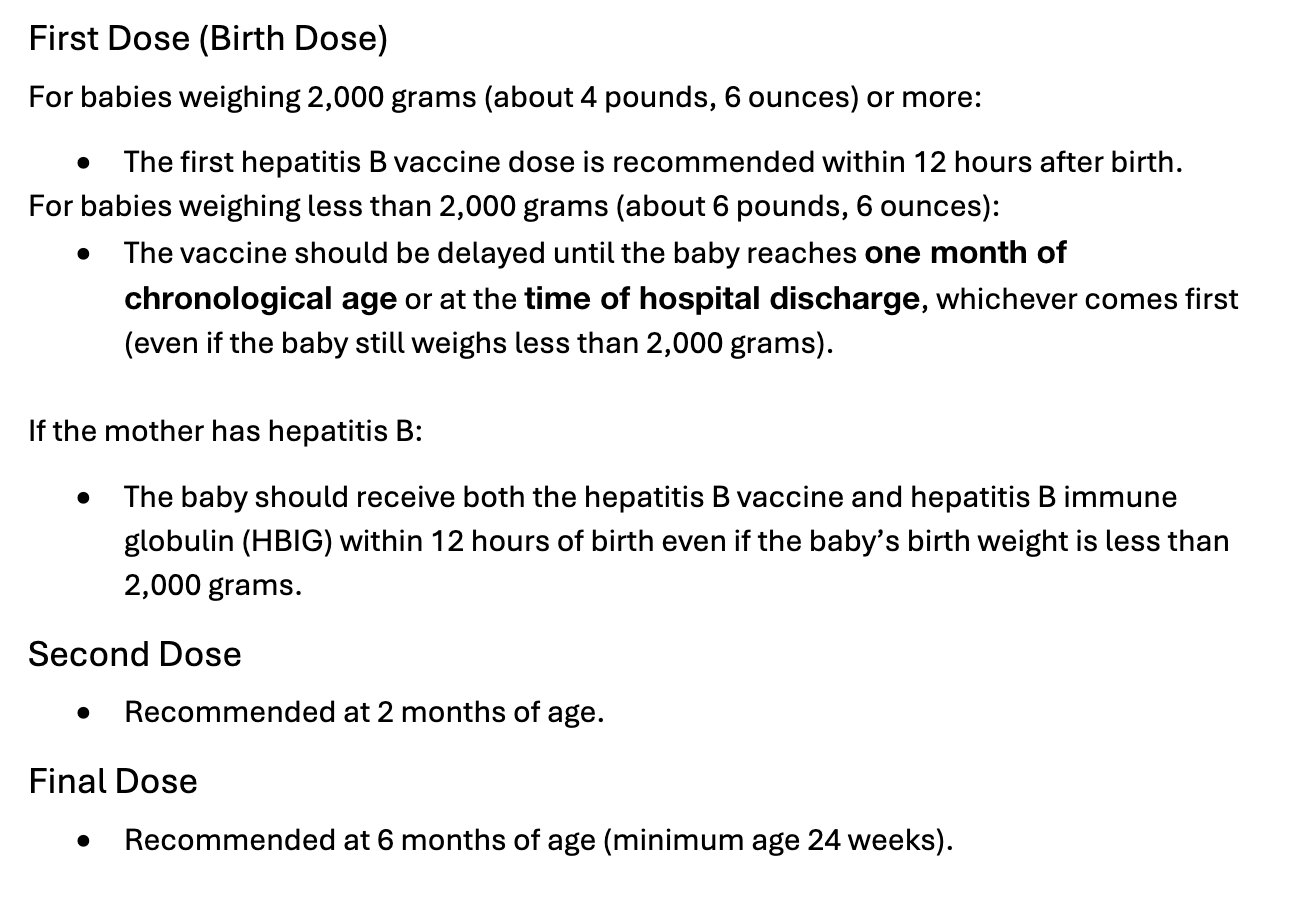
There was a controversial change from the Advisory Committee on Immunization Practices (ACIP) under the Trump administration after the administration appointed new members which departs from the longstanding policy of universal newborn vaccination that had been in place since 1991. In December 2025, ACIP voted to replace the universal hepatitis B birth-dose recommendation with shared decision-making for infants born to HBsAg-negative mothers. This decision was widely criticized by reputable medical societies including the American Academy of Pediatrics (AAP), American College of Obstetrics and Gynecology (ACOG), and American Medical Association (AMA). In response, ACOG has come out with its own immunization schedule which has been endorsed by 13 other medical and health organizations. A number of news articles quoting experts and medical societies have come out with opinion statements in strong protest of ACIP’s new recommendations against the birth dose with support for the longstanding recommendations, which are linked below:
American Academy of Pediatrics: CDC decision on universal birth dose of hepatitis B vaccine will have ‘heartbreaking’ consequences
American Medical Association: Statement on ACIP meeting
American College of Gynecologists: Comments to CDC Advisory Committee on the Importance of Guidance for Maternal and Infant Immunization
Children's Hospital of Philadelphia’s Guidance on Hepatitis B Vaccination for Newborns
American Academy of Pediatrics: Medical groups decry withdrawal of universal birth dose of hepatitis B vaccine
The birth dose provides protection during a time when babies are most vulnerable. If a baby becomes infected around the time of birth, there is a very high chance the infection will become lifelong. About 90% of babies infected at birth develop chronic hepatitis B. Over time, chronic infection can lead to severe liver disease, cirrhosis, or liver cancer.
Giving the vaccine shortly after birth greatly reduces this risk.
A comprehensive 2026 review of the literature "Hepatitis B Vaccination at Birth: Safety, Effectiveness, and Public Health Benefit" published in Pediatrics found strong evidence for the safety and effectiveness of the birth dose, with no improvement in safety or effectiveness from delaying the first dose.
Source: John's Hopkins: Hepatitis B Vaccination is an Essential Safety Net for Newborns
Yes! Studies reviewed by the Centers for Disease Control and Prevention (CDC) have found no increased risk of:
• Serious allergic reactions
• Death from any cause
• Sudden Infant Death Syndrome (SIDS)
• Seizures
• Neurological diseases
The most common side effects are mild and temporary, including:
• Redness at the injection site
• Swelling at the injection site
• Soreness where the shot was given
These side effects usually go away on their own without treatment. If you’d like to read the CDC’s review to learn more about the safety and side effect profile associated with the vaccine, the CDC has compiled the most up-to-date research here: CDC Review of the Safety of Hepatitis B Birth Dose Vaccination
Still have questions? We are happy to answer your questions.
You may give us ideas how to explain vaccines in pregnancy better.
For any personalized medical questions, we recommend you contact your medical team.